The Wrath of Achilles
The shadow ofThe One Who Steps Forward
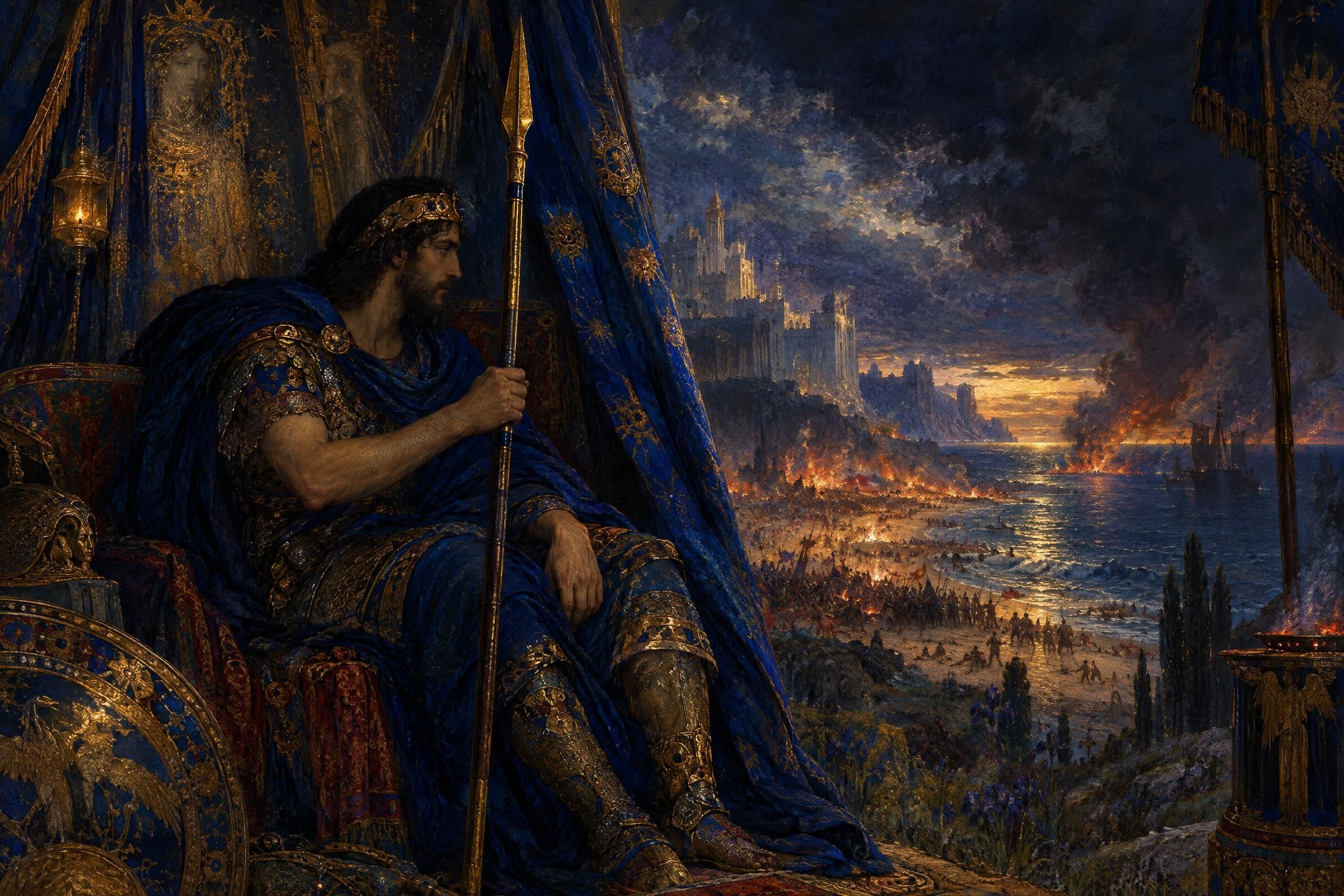
The first word of the first great poem of Europe is wrath — the wrath of Achilles, which brought the Greeks countless sorrows.
It began with a prize. In the tenth year of the war at Troy, Agamemnon, the king of the army, was forced to give up the captive woman he had been awarded. To make up his loss, he took the prize that belonged to Achilles instead — Briseis, whom Achilles had won with his own spear. It was unjust, and everyone knew it.
Achilles drew his sword, and the goddess Athena caught him by the hair and held him back. So he did something worse than kill the king. He withdrew. He went to his tents by the sea, and he asked his mother, the sea-goddess Thetis, to go to Zeus and ask one thing: that the Trojans win. Let the Greeks be driven back to their ships and die there, so that they would learn what they had lost when they dishonoured him.
Zeus granted it. The Greeks were beaten back, day after day, and Achilles sat by his ships and watched them fall.
Then Agamemnon relented. He sent an embassy to the tent with everything — Briseis returned untouched, gold, horses, cities, a daughter in marriage. The loss was made good several times over. Achilles refused. It was no longer about the prize. Not if he gave me as much as the sand and dust, he said. The wrong had to be won back on his own terms, or not at all.
So his dearest friend Patroclus went into the battle in his place, wearing his armour, and Hector killed him.
Only then did Achilles return to the war, and his wrath simply changed its target. He killed Hector and dragged the body behind his chariot, day after day. None of it brought anything back.
The wrath ended only when an old man came to his tent in the night — Priam, the king of Troy, to beg for his son’s body. Achilles looked at him and thought of his own father, and the two enemies wept together. He gave the body back. By then, everything he had raged to recover was already gone.
The trading concept
Revenge trading. Some losses feel unfair: a stop run by a spike that reversed within the minute, a gap on news no one could have known, a sound position taken away by the market for no reason anyone can name. The loss becomes an insult, and the insult demands to be answered.
That is the wrath. The next trade is no longer taken on its merits; it is taken to win back that money, from that market, now. Size goes up, discipline goes down, and each further loss makes the need to be proven right more urgent. The damage is done not by the enemy but to your own side — the rest of the book pays for the pride of one position.
Achilles was offered his loss back several times over and refused, because the market was not what he was fighting. The rule written in advance is what stands in for Athena’s hand in his hair: the next trade is sized and chosen as if the last one never happened. The market owes no one a return of what it took.
Further reading
- Homer, Iliad, Book 1 (the quarrel and the withdrawal), Book 9 (the embassy refused), Book 16 (Patroclus), Book 24 (Priam in the tent).
- Jonathan Shay, Achilles in Vietnam: Combat Trauma and the Undoing of Character (1994).
- Richard H. Thaler and Eric J. Johnson, “Gambling with the House Money and Trying to Break Even,” Management Science (1990) — the pull to win back a loss.